Style In Your Way

kids

kids

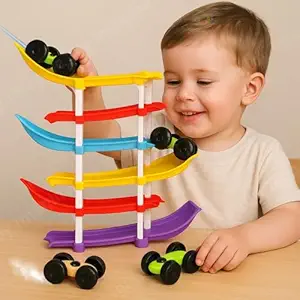
Toy Imagine 6-Level Ramp Racer

Toy Imagine 6-Level Ramp Racer: Worth The Hype Or Just Another Toddler Toy? There’s a specific kind of toy toddlers just get, without anyone explaining the rules to them. Ramp racers are one of those. Drop a car, watch it roll, repeat. That’s it. No manual needed. The Toy Imagine 6-Level Ramp Racer leans into that simplicity hard. Six colored ramps, four small cars, nothing electronic about it. No batteries, no lights, no sound effects begging for attention. Just a track and gravity doing the work. And honestly? That’s probably why it works as well as it does. If you’re shopping for a ramp racer toy for toddlers and tired of options that overpromise, this one’s at least worth a proper look before you scroll past it. What You’re Actually Getting   Six ramps, stacked in a zigzag, each a different color. A car goes in at the top, rolls down through all six levels, and lands at the bottom. Then a toddler picks it up and does it again. Over and over. Sounds repetitive because it is. But that’s not a flaw here — toddlers thrive on repetition in a way adults don’t really relate to anymore. The fifteenth trip down the ramp isn’t boring to a two-year-old the way it’d be boring to us watching from the couch. It’s practice. It’s prediction. It’s “will this happen again the same way,” and for a toddler’s brain, that question is endlessly interesting. Why It’s Actually Doing Something Useful Fine Motor Skills, Sort Of By Accident   Picking up a tiny car, lining it up at the top of a ramp, letting go at the right moment — that’s more coordination than it looks like on paper. Add in tracking the car visually as it winds down six separate ramps, and the toy’s quietly working on hand-eye coordination without ever feeling like a “skill-building exercise.” A lot of toys marketed as educational don’t actually demand much from the kid playing with them. This one does, just not in an obvious way. Basic Physics, Toddler Style   Motion. Speed. Gravity. Big words for a toy meant for one-year-olds, but that’s essentially what’s happening every single drop. Kids won’t understand any of it conceptually — they’re two — but they’re absorbing patterns. Steeper ramp, faster car. Drop it crooked, it stalls halfway down. This is the Montessori angle these toys usually get marketed with, and here it actually tracks. Cause and effect, repeated enough times, becomes intuition eventually. Colors Give Parents Something To Work With   Six ramps, six colors. Easy enough to turn into a mini game — “put the car on the yellow ramp,” that kind of thing. Doesn’t take much effort from a parent, but it stretches what the toy can do beyond just watching cars roll downhill on autopilot. Actually Built For Small Hands   This part matters more than people give it credit for. A lot of toddler-aimed toys still have edges that are a little too sharp or parts that are a little too fiddly for hands that haven’t fully figured out grip strength yet. This one’s smoothed out properly, and the cars are sized so small hands can hold and release them without a fight. That sounds like a minor detail. It’s not. A toddler who can’t physically manage a toy gives up on it fast — not because it’s not fun, but because the fumbling gets old before the fun does. Easy grip means less frustration means longer play sessions. Age range runs 12 months to 3 years, which is wider than most toddler toys manage. Most get outgrown in a few months. This one’s got more shelf life than that. Works Alone, Works In A Group   One thing I’ll give it — it flexes well depending on the situation. A toddler can sit with it solo for a solid stretch, just sending cars down repeatedly, no adult needed. But it also holds up fine in a preschool room or a playdate, where a few kids can take turns or race cars side by side. That’s not nothing. A lot of indoor toys for toddlers only really work one way or the other. Decent Gift, If You’re Stuck   Toddler gifts are weirdly hard to get right. Too advanced and it sits untouched. Too basic and it’s forgotten in a week. This one lands somewhere in the middle — simple enough for a one-year-old, still holding attention for a three-year-old. Works fine as a return gift for toddlers too, given the price point and the fact it appeals across a fairly wide age bracket without much guesswork involved. What The Reviews Actually Say   Sitting at 4.1 out of 5 stars across over a thousand reviews, and ranked #2 in Kids’ Play Car Race Tracks — not a perfect score, but a solid one, and consistent enough across that many reviews to mean something. Pricing tends to run with fairly steep discounts too, which makes it a low-risk try before committing to a bigger toy budget for your toddler. A Few Things Worth Knowing First Not everything about it is flawless, so a couple of honest notes: Setup required. It’s not fully assembled out of the box — expect a few minutes putting the ramp structure together. Takes up space. Being vertical, it needs more shelf or floor room than a flat track would. Still needs some supervision. Smooth edges help, but for kids on the younger end of that 12-month mark, keep an eye on things — standard advice for anything with small parts. Getting The Most Out Of It   Let your toddler mess around with it freely first, before trying to turn it into structured “races.” Use the ramp colors casually — no need to force a lesson out of it. Swap which cars get used now and then, keeps it feeling new. Set it up somewhere low-traffic, given how tall it stands. If more than one kid’s playing, let
kids

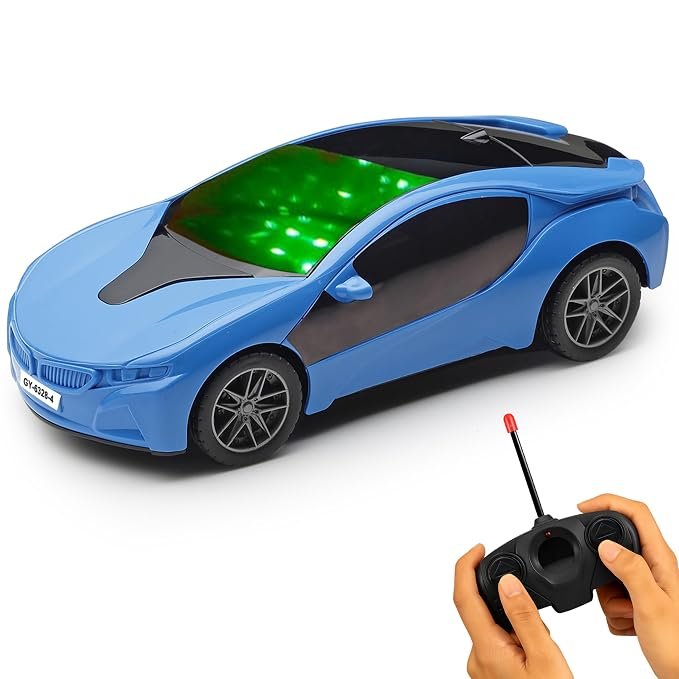
Gooyo 3D Racing Remote Control Car

Gooyo 3D Racing Remote Control Car: Is It Worth Buying For Your Kid?   Introduction   Walk into any toy aisle and you’ll find a wall of remote control cars, all promising the same things — durable, fun, educational, blah blah. Most of them blur together. But every so often one actually delivers on what it claims, and the Gooyo 3D Famous Racing RC Car seems to be one of those. If you’re shopping for a remote control car for kids, this one’s worth a proper look. It’s not flashy in a gimmicky way, but it gets the basics right — decent build, simple controls, and enough stunt features to keep a kid entertained past the first ten minutes. That last part matters more than people think, since half the toys marketed as “engaging” get abandoned within a week. Why RC Cars Still Work As A Toy Category   Screens are everywhere now, so it’s easy to assume kids have moved on from things like remote control cars. They haven’t, really. There’s something different about physically steering an object across a room versus tapping a screen. It demands actual coordination — judging distance, timing turns, reacting when the car’s about to hit the couch leg. That’s basically what this car offers. Nothing revolutionary, but it does the job a good RC toy is supposed to do: keep hands busy and attention focused without needing a screen involved. What Stands Out About This Particular Model Builds Real Skills, Not Just “Educational” Marketing Talk   A lot of product listings throw around the word “educational” loosely. Here, though, the skill-building angle actually checks out. Steering the car through tight spaces, avoiding furniture, figuring out how sharp a turn needs to be — that’s spatial reasoning in practice, even if the kid has no idea that’s what’s happening. Works fine indoors on hardwood or tile. Outdoors too, assuming the surface isn’t too rough. Driveways, garden paths, that sort of thing. The Wheel Rotation Is Genuinely Fun This is probably the best feature of the whole toy. The wheels rotate in a way that lets the car flip and spin at odd angles — forward, backward, sideways, pivoting in place. It’s the kind of thing that turns a boring straight-line drive into an actual mini stunt show. Kids seem to gravitate toward this feature specifically. It’s the difference between a car that just moves and one that performs. Controller Doesn’t Feel Like An Afterthought A lot of cheap RC cars pair a decent car with a terrible remote — too small, buttons in awkward spots, unresponsive. Not the case here. The controller’s shaped comfortably for both kids and adults, and the button layout (forward, reverse, left, right) is simple enough that a three- or four-year-old can pick it up fast. No learning curve to speak of, really. Which matters if you don’t want to spend the first hour of playtime just teaching your kid how to use the thing. Actually Holds Up To Rough Play   Made from ABS plastic — non-toxic, glossy finish, reasonably scratch-resistant. Kids aren’t gentle with toys (obviously), so durability was probably the thing I was most skeptical about going in. The suspension system helps too. It reduces friction between the tires and the floor, so the ride’s smoother and the wheels don’t wear down as fast from constant stopping and starting. Small detail, but it adds up over months of use. Solid Gift Option, If You’re Stuck On What To Get   Birthdays, Christmas, New Year — any of those work. It’s colorful, it’s interactive, and unlike a lot of gift toys, this one doesn’t require batteries-included frustration on gift-opening day… well, actually it does need batteries, but more on that below. Color Options   Six colors currently available: Blue Red Orange Yellow White Assorted (a surprise pick) Blue tends to be the most popular pick based on general demand for this style of car, but honestly all six look decent in product photos. Kids usually have a favorite color already, so this part’s easy. Batteries And Practical Stuff   Here’s something buyers often miss until it’s too late: batteries aren’t included. You’ll need 3 AA batteries for the car itself and 2 AA batteries for the remote. Grab a pack before it arrives, or you’ll be stuck with an unusable toy on opening day (ask me how I know this happens with basically every battery-powered toy ever made). Package includes just the one car and one remote — nothing extra bundled in. Made in India, recommended for ages 3 to 10, so it’s got a fairly wide window of use. What Makes This One Different From The Dozens Of Similar Cars Online   Fair question, since there’s no shortage of remote control toy cars competing for the same shelf space. A few things push this one ahead: Price point is genuinely competitive — around 60% off the listed price at time of writing, which is hard to ignore. It’s ranked within the top 20 for Remote- & App-Controlled Cars on Amazon, and has over a thousand customer reviews backing it up. It works as a display piece too, not just something shoved in a toy box when not in use. None of that guarantees perfection — some reviews mention the rating sits around 3.4 out of 5, so it’s not flawless. But for the price, expectations should probably be set accordingly. A Few Tips If You Do Buy It   Let younger kids practice indoors first, on a flat surface, before taking it outside. Watch outdoor terrain — gravel or rough pavement isn’t ideal for the wheels long-term. Buy backup batteries. Seriously, just do it upfront. Give the stunt features some open space to actually show off what they can do. Wipe it down occasionally to keep the glossy finish from getting scratched up early. Conclusion No toy is perfect, and this one’s no exception — a 3.4-star average rating tells you there’s room for improvement somewhere.

kids

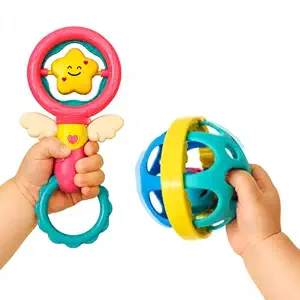
Innovitoy Star Rattle & Biggie Ball Set: A Simple Toy That Actually Helps With Teething   If you’ve got a baby going through teething right now, you already know the drill. The fussiness. The drool. The constant need to chew on literally anything — fingers, blankets, the edge of the crib if they can reach it. Most parents just grab whatever toy’s closest. But there’s actually a decent case for picking something purpose-built for this stage, rather than handing over a random plastic toy and hoping for the best. That’s basically what Innovitoy’s Star Rattle + Biggie Ball combo is going for. Not flashy, not loaded with features — just two simple pieces meant to do a specific job. Let’s see if it actually delivers. What You’re Getting   It’s a two-piece set: a star-shaped rattle (complete with little wings and a smiling face — cute, if that matters to you) and a soft, flexible ball nicknamed the “Biggie Ball.” There are other combo options too — two balls instead, or a ball paired with a small dumbbell teether — depending on what you pick at checkout. The star has a ring handle you can hear rattle when shaken, and it’s finished in soft silicone, so chewing on it is basically the point, not an accident. The ball’s built with an open, bendy structure that’s genuinely easy for small hands to grab onto, squeeze, or just roll around. Two different textures, two different jobs — sound and grip from the rattle, tactile exploration from the ball. The Materials Are Where It Gets Serious   Here’s the thing about baby toys — this is really not the category to cheap out on. Anything going into a baby’s mouth for hours a day (and let’s be real, that’s most toys during this phase) needs to actually be safe, not just labeled safe. This set uses ABS plastic and food-grade silicone, both BPA-free and non-toxic. It’s also BIS approved and made in India — which, for what it’s worth, means it’s actually gone through local safety checks rather than just showing up with a vague “safety tested” sticker and nothing to back it up. Small detail, but it matters more than most of the flashy features other toys try to sell you on. So What Does It Actually Do   Helps with teething, genuinely. The silicone parts are soft enough on sore gums that it’s not just another hard plastic thing getting gnawed on. During the worst of teething, that difference is noticeable. Builds grip strength. The shapes — the ring, the ball — are sized specifically for tiny hands. Grabbing, holding, shaking these things is part of how motor skills develop this early, so it’s not just incidental. Gives some sensory feedback. The rattle sound ties movement to noise, which is a pretty basic but genuinely useful bit of stimulation for a baby this age. Easy enough for a baby to hold alone. Anyone who’s watched a baby fumble with a toy that’s just a little too heavy or awkwardly shaped knows why this matters. This one’s light enough that babies can actually manage it themselves, at least some of the time. Who Should Actually Buy This Makes sense if: Your baby’s somewhere in the 0–12 month range and teething’s already started (or about to) You want something that does more than just make noise You’re shopping for a baby shower gift and want something that’ll actually get used You care about material safety and certifications, not just price You want a toy your baby can hold and explore mostly on their own Skip it if you’re after something with lights, music, screens, whatever — this is deliberately basic, and for very young babies, that’s honestly a feature, not a limitation. A Few Practical Tips Nothing groundbreaking here, but worth saying anyway: Check it every so often for cracks or wear, especially once your baby starts really going at it with their teeth. Wash it regularly — it’s simple enough to rinse or wipe down, so there’s no excuse not to. Watch your baby the first few times they use it, just until you know how they handle it. If your baby’s picky about textures, give it a few tries before deciding it’s not for them. Some babies take a bit to warm up to something new. Quick Specs Attribute Detail Brand innovitoy Set Type Rattle + Teether Ball Material ABS Plastic, Food-Grade Silicone Age Range 0–12 Months Dimensions 17 x 10 x 17 cm Certification BIS Approved Made In India Safety BPA-Free, Non-Toxic Why Bother With a Combo Instead of Buying Separately Honestly, buying individual toys for teething, grip practice, and sensory play adds up quick — and you usually end up with a pile of stuff your baby ignores half the time anyway. A combo like this hits a few needs at once without you having to guess which single toy is actually going to hold their attention that week. It also just makes a better gift than yet another onesie. New parents get flooded with clothes. Something they’ll actually reach for tends to land better. Keeping Expectations Realistic   No teether fixes teething completely — that’s just not how it works. What this kind of toy does is give your baby something safe to redirect all that chewing toward, while also quietly helping with grip and sensory stuff on the side. And babies are inconsistent about this too. Some will love the rattle sound right away. Others will go straight for the ball and ignore the star completely for a week. That’s normal, not a sign anything’s wrong with the toy. Final Thoughts   This set isn’t trying to be clever or gadget-heavy. It’s doing something more basic — and more useful, honestly — by giving a baby a safe outlet for the chewing urge while helping build grip and sensory skills along the way. Conclusion   If you’re in the thick of teething with a baby, or

Scroll to Top